
"Every Valley" and its message of hope in AI's "uncanny valley"
There’s one thing tech billionaires, tech bros, and tech bashers seem to agree upon. Our AI future is as consequential as any scientific, cultural, political, or economic disruption in human history -- fire, the wheel, steam power, electricity, you name it.
How AI and humanity will work together for good or bad fascinates me. It fascinates a lot of people, but I find a lot of what’s written to be simplistic. My previous piece on Substack (Who’s Training Whom?) and an earlier piece I wrote on Medium about philosopher Charles Taylor’s arguments for Romanticism in these times are results of this fascination.
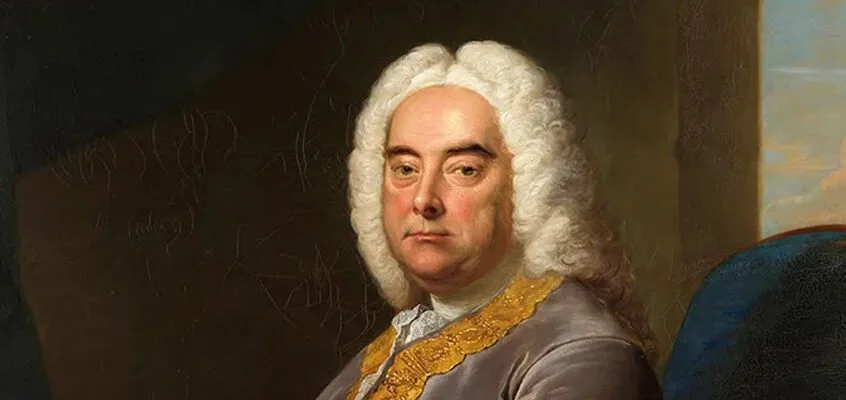
Every Valley: The Desperate Lives and Troubled Times That Made Handel’s Messiah by Charles King contributes richly to my thesis that it is Romanticism as much as Reason (so often associated with the Enlightenment) that we need to embrace in this AI era.
The composer and conductor John Adams reviewed Every Valley for The New York Times. He concludes his review where I begin mine – music about a period of profound anxiety.
Whether you like classical music or not, you are familiar with the rousing and soulful Hallelujah chorus. It is an essential anthem of Christmas, though it was more often heard around Easter in the decades preceding Christmas’s later commercial razzle dazzle.
“The Messiah’s form is a Christian story of God's plan for humanity’s salvation,” King writes. “Its substance, however, is the struggle to think ourselves toward hope.”
There is no agreed upon date for when the Enlightenment began, but Descarte’s Discourse on the Method in 1637 and Isaac Newton’s Principia Mathematica in 1687 were important factors on the road to the Age of Reason. The Industrial Revolution of the 1700s and 1800s soon followed. And it is these events that the tech barons, bros, and bashers so often cite in interviews, speeches, and op-eds. The primacy of math, science, and reason gave us progress, they argue.
But just as it does today with the advent of AI, the Industrial Revolution caused great concern about the future of individual jobs and socio-economic outcomes. The steam engine, and the American and French Revolutions were fast approaching when the Englishman Charles Jennens, a reclusive man of wealth, in 1739 began cribbing quotations from his vast library, words that would eventually become the libretto for George Frideric Handel’s Messiah.
Read the rest of this post on (and subscribe to) our founding editor’s Substack.